
The moment you debut those tiny babies or matching toddlers in public, i.e. go to the store, get some much needed coffee, or head out to a play date, be prepared for the intensely personal questions, inappropriate comments, and all-around staring that comes with raising triplets. Apparently intensely personal questions from complete strangers aren’t off limits when your life is on display, and you learn to roll with the punches and laugh at some of the ridiculous things that come your way.
Sets of triplets are relatively uncommon, in general and even more so across our home state of Alaska, with only three sets born in Alaska (including us) in 2018. Identical triplets are even more uncommon; and we were the only identical set born in the state that year. It’s always an adventure to see how people react when you are out and about, minding your own business and trying to get through the day with the chaos of three little ones.
Q: Are they twins?
A: Believe it or not, we get asked this one ALL THE TIME. Either the average person can’t count (1, 2, 3- this is all I seem to do everyday) or they just aren’t paying attention. Twins are far more common than triplets, so most people are surprised, shocked or in awe when they are corrected. I typically answer with a smiling (snobby) “no, they are triplets. Twins would be too easy.” (two babies = two arms / three babies = still two arms…)

Q: Are they natural?
A: The correct question is are they spontaneous…and yes, they are. This occurs in roughly 32 out of every 100,000 births in the US, according to our doctor. This is one of those immensely personal questions…
All babies are natural really! If your family conceived through IVF, we salute you! Your baby(s) is wonderful and just as amazing as ours. We all have a journey to go through with wins and losses; be proud and vocal with your story! Fertility should not be a taboo topic, everyone deserves support and guidance through this journey.
Q: Do multiples run in your family?
A: Yes, we have fraternal twins are on both sides of our families. Genetically speaking, spontaneous, identical multiples are a genetic fluke and not something that can pass down through generations. The Douglets are the first set of triplets in our family and the first granddaughters on Craig’s side of the family. It’s highly unlikely this would occur a second time (not that we would tempt fate at this point), but there are still odds that fraternal twins could happen to us!
Q: What was their due date?
A: Their 40 week due date was May 8th, 2018; however, 36 weeks is the realistic due date for triplets and the one the doctor’s use. We delivered on March 20th, 2018, well before the average 40 week date.
Q: How far along were they at birth?
A: They girls made their debut at 33 weeks on the dot. This was Becca’s goal to make, as the risk of brain bleeds goes down 95% at 33 weeks.
Q: Did you have any weird pregnancy cravings?

A: The morning (all-day) sickness kept most cravings at bay the first four months, but eventually the main cravings were Taco Bell hard tacos (not anything else from there!), tapioca pudding and ice cold milk. Not mixed together but eaten quite a lot!
Later on in the pregnancy protein shakes became a must to absorb enough calories and protein throughout the day. You wouldn’t believe how intensely hungry one is while growing triplets in the rare moments the nausea subsided; and how difficult it becomes to fit food in one’s stomach when growing babies are hanging out on it. Packing in those calories was very difficult, with the doctor recommending 100+ grams of protein per day. That’s a lot of protein!
Q: How was pregnancy?
A: A dad’s answer to this question is very different from a mom’s. Dads often say it went by quick and we had minimal complications. Moms respond it was the longest nine (seven for me) months of our entire lives, with around the clock morning sickness for waaaaay too long! The doctor prescribed Diclegis for me to help curb the nausea, which helped food stay down for the most part, but still made for a long few, nauseated months in a time before telework was a thing. After the morning sickness subsided, then came the big belly, difficulty getting comfortable and squished organs!
Q: Did you go on bed rest?
A: I went on modified bed rest for about two months and up until delivery day. This allowed me to work from the recliner chair in my living room, before that was normal practice in a post-COVID society. Doing this allowed me to stay out of the hospital and monitor my blood pressure as the babies developed. It also allowed me to stay in comfy pajamas and maternity wear up until the day they were born!
Q: Were they natural birth or Cesarean Section?
A: We opted for our doctor’s recommendation to do a C-Section. With their configuration in the womb, natural childbirth was far too dangerous and had a 99.99% guarantee of a surgical outcome anyway. In the end we didn’t have a choice given my pre-eclampsia issues. And, like I enjoy telling people now, why not be super efficient!? All three girls were out in less than two minutes!

Q: How long was the hospital/NICU stay?
A: Our NICU stay lasted about a month total and provided time for mom to heal from the surgery and regain mobility strength (after being home and on modified bedrest for two months). Harper and Emerie shared a NICU room at first with Reagan right across the hall. Eventually we were given the “luxury suite” that fit all three together, and had a window to outside! Reagan came home April 17th at 28 days old. Harper and Emerie came home on April 21 at 32 days.
Q: Did you exclusively breast feed, pump, use formula, or a combination of all three?
A: Please note, there is no right answer to this question, only a “right-for-you” answer. Everyone is different and that’s okay; it’s all about what is best for your babies! Because of the NICU stay, we decided the best option for us was exclusively pumping and feeding the girls with bottles. Within two hours of delivery, I worked to start my milk supply, pumping around the clock every 2-2.5 hours or so at the beginning. This was very doable with the girls at the hospital, and prepped more for the round-the-clock feedings once they came home.
Q: Do you have any recommendations for improving milk supply?
A: Luckily my milk came in and I was able to nearly exclusively supplement the girls on breast milk for the first year. A few things I’ve found to help increase milk supply: eat a LOT and drink as much water as possible, find ingredients for lactation cookies/snacks and request friends make them for you (until you have time to), take hot showers and use hot compresses before pumping, power pump, and stay dedicated to your pumping schedule, even when tired and busy. It’s worth it!
Q: What was the first month home like?
A: The first month at home was such a blur. The girls were only about four pounds, big enough to ride in a car seat but small enough to seem very fragile to a new parent. The first several months included round the clock feeding to increase weight, meaning about every three hours, with the feeding taking an hour of that, so sleep was not in the cards. We slept an hour here and there throughout this time and I pumped around the clock as well to increase supply. Doing this without any local family support was probably the toughest part of our journey so far, that and doing everything on zero sleep.
Q: Are they identical?
A: Yes, all three girls are identical. Having spontaneous identical triplets is around a 1 in 200 million chance. At about 4 months old we mailed in a DNA test to confirm. As they grow older they continue to look very similar, with the exception that one wears glasses and is slightly smaller than the other two, who match in height and weight at every checkup.
Q: How do you tell them apart?
A: When they were very young in the middle of the night…we didn’t always… all the other times it is easy to tell Emerie from the other two as she is a couple pounds smaller and had a hemangioma on her forehead until about age two. When they were smaller, Harper had a longer face than Reagan and a similar hemangioma on her back, and Reagan chubbier cheeks and only a skin tag on her back. Coming home from the hospital we painted toenails heir assigned colors, but that ended pretty quickly. You try painted a four pound baby’s toenail; it’s hard! And as they grew we put them in distinct colors: Harper in pink, Emerie in purple and Reagan in teal.
The older they get, the more personalities and mannerisms differentiate who is who. They all have slightly different laughs and cries, and are typically distinguishable by the parents from a distance based on sound. Most people that we don’t see daily use the color each uses (pink/purple/teal) and knows recognizes Emerie with her glasses. Mom and Dad can tell who is who based on a variety of things; I can’t always explain it but I can just tell them apart. If they run by in a blur, then it is much harder to get it right.
Q: What is the hardest age so far?
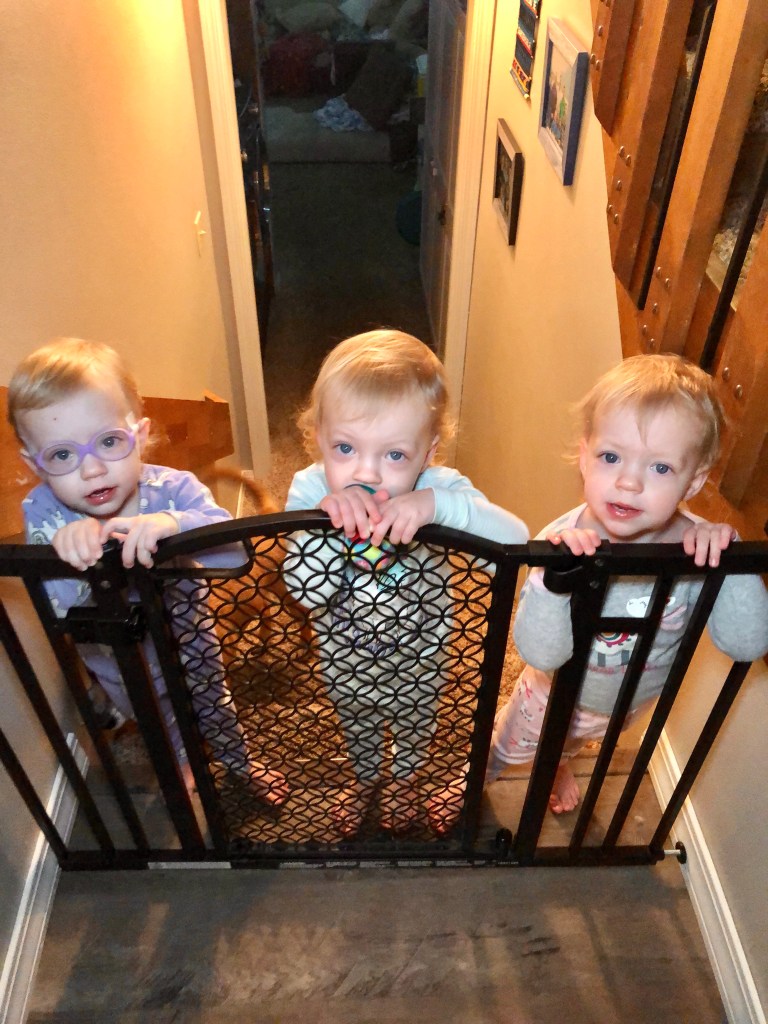
A: Each year seems to be hard in a different way. The first few months were physically the hardest, with round-the-clock feeds every three hours, 24 hours a day. That meant feeding them, pumping, and trying to get a few things done around the house and maybe a short nap in, 24/7. Once longer sleep stretches occurred, daily life became a little more manageable with some sleep. We had a good stretch of sleep from about Month 5 to Month 9, until teething ruined it!
Once mobility occurred, for us at about a year, days became harder in a different way. The girls were easier to feed, play with, entertain, etc., but definitely harder to keep an eye on. They became climbers and escape artists at age two, making the days a little easier in terms of communication but otherwise stressful in different ways. Age three presented a new set of challenges, including potty training and the latest phase of arguing, fighting, and whining.
Age four started out very similar to age three, but a few months in, things started to get easier. The girls improved at playing together as well as entertaining themselves separately with toys. Kids can have unsupervised moments so parents can get quick things done and getting out and about is 1000x easier.
There is always something that needs to be done, someone who is throwing a fit, or someone who is whining! Toddlers and preschoolers are not for the weak of heart!
Q: Are you having more kids?
A: We get asked this constantly. In fact, within the first few months numerous people curiously inquired about this. At age three, I get about the same amount of people asking but it’s finally starting to lessen up as we round toward school age. So…ask us again in a few years or once we survive a few more years!! If you question this answer, come over and babysit for an afternoon…then it’ll be clear as day!
Q: Why are we blogging?

A: To be a resource!!! There are not a lot resources, blogs, and what not out there for multiples and triplet families. We hope that a triplet family or two can find our blog and it can answer the questions and settle the worries that we once had.
There are many good resources for twins, which we found helpful; however, logistically speaking routines for triplets and twins are vastly different. We find that adding a third kiddo (regardless of which one) to any equation, whether that is a normal activity or a chore, throws off the balance and can cause disruption. To anyone reading this who is expecting triplets; unfortunately neither a third arm or a third boob grows in at birth. I was really counting on that when I was pregnant!
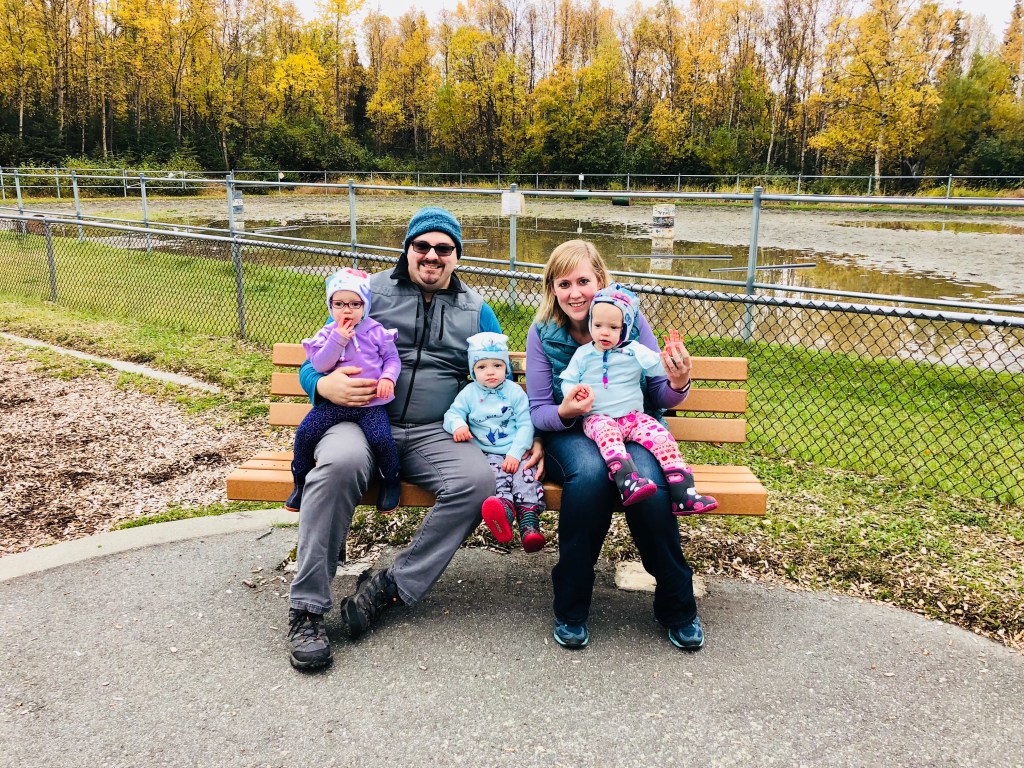
We also enjoy blogging as a way to look back on our family adventures. The first few years are full of many sleepless nights and extremely over tired and burned out parents. This is a way to remember all the wonderful, little things throughout that time and capture how amazing this journey really is, even when you are in the thick of it. As the kids grow up, knowing and remembering those stories is so very worth it.
 The Douglets